
 0
0



- Home
- Blog
- Technical Insights
- How to Choose a Brushless DC Motor: BLDC Motor Principles, Advantages, Limitations, and Applications
How to Choose a Brushless DC Motor: BLDC Motor Principles, Advantages, Limitations, and Applications
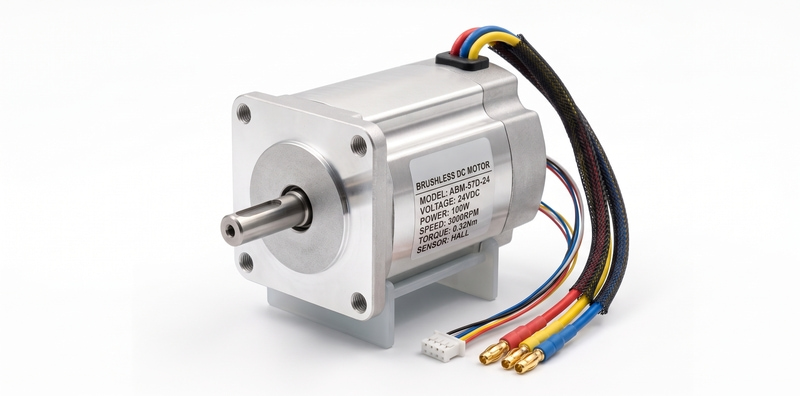
As battery-powered equipment and electrified products become increasingly widespread, motor performance and control requirements are also rising. Brushless DC motors use electronic commutation technology to replace traditional brushes, reducing component wear and maintenance requirements while offering high efficiency, low noise, and excellent speed control. This article provides a quick overview of the operating principles, core components, advantages and disadvantages, and application scenarios of brushless DC motors, helping you make more informed decisions when evaluating and selecting a BLDC motor.
What Is a Brushless DC Motor?
A brushless DC motor is a permanent-magnet motor powered by direct current (DC) and operated through electronic commutation. Its key difference from traditional brushed motors is that it uses neither brushes nor mechanical commutators; instead, electronic control components control the energization sequence of the stator windings. When the stator windings are energized in sequence, they produce a changing magnetic field that interacts with the rotor's permanent magnets to create electromagnetic torque, causing the rotor to rotate continuously.
What Are the Core Components of a Brushless DC Motor?
Stator
In a motor, the stator is the stationary component, typically composed of silicon steel laminations and three-phase coils. During motor operation, the controller energizes the coils in sequence, causing the stator to generate a rotating magnetic field. When this magnetic field interacts with the rotor's permanent magnets, it produces electromagnetic torque that drives the rotor to rotate.
Rotor
The rotor is the component responsible for rotation and power output in an electric motor. It contains permanent magnets and is connected to the shaft. When the stator coils are energized, they generate a magnetic field that drives the rotor. As the rotor continues to rotate, the shaft transmits the motor's power to external equipment, allowing the equipment to operate.
Hall Sensor
Hall sensors are primarily responsible for detecting the rotor position and transmitting the detected signals to the controller. After receiving the signals, the controller adjusts the energization sequence of the stator windings according to the rotor position, allowing the magnetic field to continuously drive the rotor. In brief, Hall sensors provide rotor position information, enabling the controller to determine the commutation timing and maintain normal BLDC motor operation.
Controller / Driver
A motor controller is responsible for controlling the operation of a brushless DC motor. Based on rotor position signals returned by the Hall sensors, it controls the timing and sequence of stator winding energization. During motor operation, the controller continuously switches the winding energization states, using electronic commutation to generate a changing magnetic field in the stator that continuously drives the rotor. The controller's control method also affects motor speed and operating performance.
How Does a Brushless DC Motor Control Speed and Torque?
Brushless DC motors primarily adjust speed and torque through electronic commutation and current control. Based on the rotor position, the controller switches the energization sequence of each phase winding at the appropriate time to keep the motor rotating. It also uses PWM to vary the input voltage and winding current. In general, the PWM duty cycle affects speed, while the winding current is closely related to output torque.
Electronic Commutation
Brushless DC motors do not use the brushes and mechanical commutators found in conventional motors, so the winding energization must be controlled electronically. Based on the rotor position obtained from Hall sensors or other methods, the controller switches the energization states of the three-phase windings at the appropriate time, causing the stator magnetic field to change with the rotor position and continuously drive the rotor. Inaccurate commutation timing may affect motor efficiency, torque, and operating performance.
PWM Speed Control
PWM (Pulse Width Modulation) is a common speed-control method for brushless DC motors, and the driver adjusts the average voltage and current received by the windings by changing the PWM signal duty cycle, allowing the motor speed and torque output to be adjusted according to control requirements. In actual applications, appropriate PWM parameters must be set according to the specifications of the BLDC motor and driver.
What Is the Role of the Controller in a Brushless DC Motor System?
In a brushless DC motor system, the controller is primarily responsible for electronic commutation, speed regulation, and overall motor control. It adjusts the motor speed and output based on feedback signals, enabling the motor to meet different load requirements. Some controllers also provide overcurrent, overvoltage, undervoltage, and overtemperature protection, and can control motor start/stop, speed, and direction.
Brushless DC Motor: Advantages and Limitations
Brushless DC motors eliminate carbon brushes and mechanical commutators, reducing component wear and maintenance requirements. However, when paired with an electronic control system, the overall cost and control complexity also increase, so the actual selection still needs to consider application requirements.
Performance Advantages of Brushless DC Motors
-
High-Efficiency Operation: Brushless DC motors use electronic commutation and typically achieve efficiencies of around 85%–90% or higher, compared with approximately 60%–70% for brushed motors, helping reduce energy losses during operation.
-
Reduced Mechanical Wear and Lower Maintenance Requirements: Brushless DC motors operate without brush contact or brush wear, eliminating the need for regular brush replacement and reducing maintenance requirements caused by component wear.
-
Precise Speed and Torque Control: Electronic controllers can adjust the motor energization method according to equipment requirements, further controlling speed and torque to maintain stable motor operation.
-
Reduced Operating Noise: Without carbon-brush friction or sparking, these motors operate more quietly and can also reduce carbon dust and electromagnetic interference, making them suitable for environments such as medical equipment, food-processing equipment, and cleanrooms.
What Should You Consider Before Using a Brushless DC Motor?
-
Complex Control System: Brushless DC motors require electronic controllers, position sensing, and control software. System design and parameter adjustment are relatively complex, resulting in higher development and maintenance requirements.
-
Higher Initial Cost: In addition to the motor itself, equipment such as controllers and sensing components is required. Initial setup costs are generally higher than those of brushed motors with simpler structures.
-
Control System Compatibility Required: The motor, sensors, and controller must work together. Mismatched specifications or control logic may result in abnormal startup, overheating, or unstable operation.
-
Higher Technical Requirements for Maintenance: Faults may involve the motor, controller, sensors, or control software. Maintenance requires not only inspection of mechanical components but also expertise in electronic control.
Comparison of Brushless DC Motors and Traditional Brushed Motors
| Comparison Item | Brushless DC Motor | Traditional Brushed Motor |
|---|---|---|
| Commutation Method | Electronic commutation is performed by controlling the coil energization sequence through an electronic controller. | Commutation through carbon brushes and a mechanical commutator |
| Service Life | No carbon brush wear; wear primarily occurs in components such as bearings, resulting in a generally longer service life | Carbon brushes and the commutator wear over time and require replacement or maintenance as needed |
| Operating Efficiency | Higher, approximately 85%–95% | Lower, approximately 60%–75% |
| Maintenance Requirements | Lower maintenance requirements | Regular inspection and replacement of carbon brushes are required |
| Operating Noise | Lower noise, with no brush friction | More noticeable friction noise; may produce sparks |
| Control Flexibility | Precise control of speed, torque, and position, supporting higher-speed operation | Lower control precision; brush wear increases at high speeds |
(Swipe left or right to view the table on mobile.)
What Equipment Is a BLDC Motor Suitable For?
BLDC Motor Applications 1 | Electric Vehicles and Auxiliary Systems
BLDC motors are commonly used in electric bicycles, electric motorcycles, mobility scooters, and low-speed electric vehicles. These vehicles require motors that provide stable driving force while balancing weight, efficiency, and control requirements. When electric vehicles use BLDC motors, electronic controllers can adjust motor speed and output to accommodate different conditions, such as starting, accelerating, and driving. In addition, the absence of carbon brushes and mechanical commutators results in relatively less component wear.
BLDC Motor Applications 2 | Battery-Powered Equipment
In battery-powered equipment, BLDC motors can be used in products such as cordless lawn mowers and cleaning equipment. Such equipment typically needs to balance motor performance and battery runtime. When paired with a controller, a brushless DC motor can adjust speed and output according to equipment requirements, reducing energy loss during operation and making it suitable for equipment requiring extended operation.
BLDC Motor Applications 3 | Medical Devices and Laboratory Equipment
Medical devices and laboratory equipment often need to operate for extended periods and therefore have specific requirements for motor speed stability and reliability. For example, in a blood centrifuge, the motor drives the internal rotor at high speed, using centrifugal force to separate blood samples. As brushless dc motors have no brushes, they reduce brush wear and carbon dust generation, making them suitable for centrifuges requiring stable high-speed operation. ADLEE can provide customized motor designs based on equipment size, speed, and actual operating conditions.
BLDC Motor Applications 4 | Industrial Equipment
In industrial equipment such as machine tools (CNC grinding machines, lathes, CNC punching machines, and drilling machines) and automation systems, BLDC motors can be used in applications requiring extended operation. Without carbon brushes and mechanical commutators, motors experience less contact wear during operation, do not require periodic carbon brush replacement, and reduce routine maintenance. When paired with a controller and position feedback, speed and torque can also be adjusted according to equipment requirements.
BLDC Motor Applications 5 | Fans and Pumps
Brushless DC motors are also commonly used in equipment such as HVAC systems, industrial blowers, and fluid pumps. The operating load of such equipment varies with usage conditions, and the motor can be paired with a controller to adjust speed so that airflow or flow rate matches actual demand. Compared with fixed-speed operation, adjusting output according to load helps reduce unnecessary energy consumption.
How to Choose a Brushless DC Motor: 5 Key Selection Factors
Power and Load Requirements
When selecting a brushless DC motor, first confirm the load required for normal equipment operation and power requirements, then compare them against the motor's rated specifications. In addition to normal operating conditions, consider startup loads, transient loads, and extended operating periods to avoid operating the motor beyond its rated range for prolonged periods.
Speed and Torque
The motor's speed and torque must match the equipment's actual operating requirements and should not be selected based on a single specification value alone. When selecting a motor, in addition to confirming normal operating conditions, startup, acceleration, and load variations must also be considered; if the equipment requires low-speed operation or frequent starts and stops, confirm that the motor can still maintain stable output under these conditions.
Operating Voltage and Current
Different equipment uses different power supply conditions, and the operating voltage and current of a BLDC motor must also match the actual power supply system. When selecting a motor, confirm its rated current and the current requirements during startup, acceleration, or increased load, while also considering whether the power supply and driver specifications are compatible with the motor.
Operating Environment and Run Time
The operating environment and run time are also important selection considerations. High temperatures, humidity, dust, or limited installation space may all affect motor operation; if the equipment needs to operate for extended periods, further consideration should be given to the heat dissipation method and duty cycle, to prevent heat buildup from affecting motor performance.
Driver and Control Requirements
When selecting a BLDC motor, consider speed control, start/stop methods, PWM signals, and Hall sensor position feedback requirements. If the equipment has specific control signals or communication methods, also confirm whether the driver supports the relevant signals.
Choosing a BLDC Motor? Consider ADLEE Technology
Finding the right BLDC motor involves more than confirming that its specifications meet requirements; whether the supplier can provide subsequent integration and development support is equally worth considering. Since its establishment in 1974, ADLEE Technology has continuously invested in the R&D and manufacturing of DC motors and drivers. Its product range includes brushless motors, servo motors, inverters, and electric vehicle power modules, and the company is ISO 9001 certified. ADLEE has an in-house R&D team responsible for both hardware and software development, with customized engineering capabilities for integrating motors, drivers, and control systems according to equipment requirements.
〈Recommended Products: Brushless Motor and Drive〉
Conclusion
When selecting a brushless DC motor, factors such as load, speed, power supply conditions, and operating environment must be considered. Equally important are the driver selection and control method, as both can affect motor performance. ADLEE can assist with brushless DC motor selection, driver matching, control system integration, and customized development based on the requirements of different equipment. If you have related requirements, please contact us for more product details.

ADLEE
Adlee focuses on motor and drive innovation, delivering reliable, high-quality solutions that meet international standards and support diverse applications.
