
 0
0



BLOG
- Home
- Blog
- Technical Insights
- Analyzing the Future Trends of Industrial Motors and Electric Vehicle Technologies
Analyzing the Future Trends of Industrial Motors and Electric Vehicle Technologies
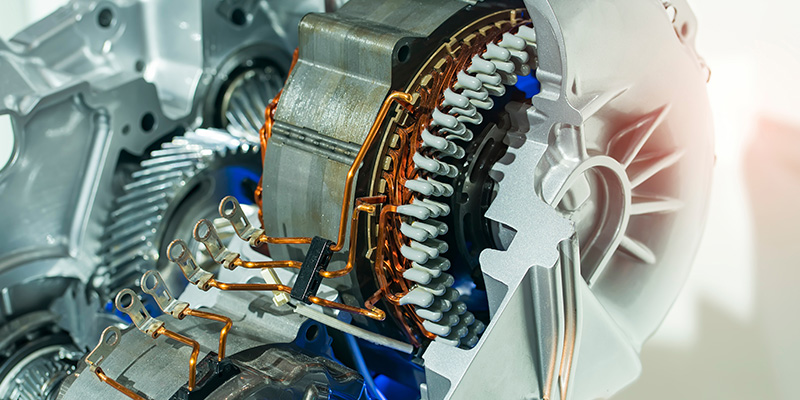
In the wave of industrial automation and electrification, motors are no longer just a simple power source, but the core of overall system efficiency and intelligent control. From high-precision brushless servo motors to integrated electric vehicle power modules, companies are enhancing competitiveness through more efficient and stable solutions. Adlee has long been deeply engaged in the field of power and power electronics, committed to providing high-quality products that meet international standards to satisfy diverse industry needs.
Related product: Matchservo motors
Related product: Inverter Duty Motor
Related product: IE3 V3 Induction Motor
Related product: E-Vehicle Traction Module
Driven by industrial upgrading and energy-saving trends, motor technology is shifting from a "single component" to a "total solution." From high-efficiency brushless motors to intelligent drive control and electric vehicle applications, companies that master key technologies will gain a competitive advantage in the future market. Continuous investment in R&D and quality improvement is the key to advancing toward smart manufacturing and green energy.
01. High-efficiency brushless technology for improved overall performance
Brushless motors replace traditional carbon brush structures with electronic commutation design, effectively reducing mechanical wear and failure rates while significantly extending service life, allowing equipment to maintain stable output during long-term operation while reducing maintenance costs and downtime risks. Its excellent speed control capability and high torque characteristics enable smooth and precise operation across both low-speed and high-speed conditions, making it especially suitable for automation production lines, CNC machining equipment, and precision positioning systems. Combined with advanced control technology, it achieves real-time response and high-precision operation, becoming an indispensable core power source in modern smart manufacturing.Related product: Matchservo motors
02. Intelligent drive integration for simplified system architecture
Modern drives have evolved from simple control devices into intelligent cores integrating speed, torque, and position control. With built-in multi-stage positioning functions, parameter settings, and communication integration capabilities, they significantly reduce reliance on external PLCs while simplifying overall system architecture and wiring complexity, making system design more flexible and efficient. In addition, drive systems can provide real-time operational data feedback to help users monitor and optimize performance, improving equipment stability and laying the foundation for smart manufacturing and Industry 4.0 applications, enabling more precise and efficient production processes.Related product: Inverter Duty Motor
03. IE3 high-efficiency motor for energy saving and sustainability
IE3 induction motors optimize electromagnetic design and energy conversion efficiency, effectively reducing power loss and improving overall operating performance. In long-term industrial environments, they significantly reduce energy consumption and operating costs, making them especially suitable for continuously operating equipment such as fans, pumps, and air conditioning systems. At the same time, their stable and reliable structural design allows the motor to maintain excellent performance under high load conditions, reducing failure rates and extending equipment lifespan. They not only meet global energy-saving and carbon-reduction trends but also help enterprises achieve ESG and sustainable development goals, making them an essential high-efficiency power solution in modern industry.Related product: IE3 V3 Induction Motor
04. Electric vehicle power module for future mobility solutions
With the rapid growth of the electric vehicle and smart mobility market, power systems are evolving toward higher integration and efficiency. Electric vehicle power modules integrate motors, controllers, and power systems, not only reducing size and improving overall system performance, but also lowering energy loss and enhancing operational stability. In addition, high power density design and excellent heat dissipation capability allow adaptation to various usage scenarios and complex environments. Through precise output control, it further improves driving range and experience, widely used in electric scooters, logistics vehicles, and various low-speed electric vehicles, becoming a key factor in future smart transportation development.Related product: E-Vehicle Traction Module
Driven by industrial upgrading and energy-saving trends, motor technology is shifting from a "single component" to a "total solution." From high-efficiency brushless motors to intelligent drive control and electric vehicle applications, companies that master key technologies will gain a competitive advantage in the future market. Continuous investment in R&D and quality improvement is the key to advancing toward smart manufacturing and green energy.

ADLEE
Adlee focuses on motor and drive innovation, delivering reliable, high-quality solutions that meet international standards and support diverse applications.